|
|
Double Diamonds - Australian Commandos in the Pacific
 |
Double Diamonds - Australian Commandos in the Pacific
By Adam Brooker
The Australian Commando Independent Company was something I was really hoping would make it into the Pacific books, they are probably not well known outside of niche military history circles, but they had a huge influence on modern Australian special forces, and units like the 2/2 Commando helped shape the modern Australian SAS and Commando Squadrons.
|
|
The Australian Commandos
Modelling themselves on the new British Independent Companies (Commandos) that Winston Churchill had ordered formed in 1940 in Europe, the Australian Army looked at starting their own Independent Companies (later named Commandos) in late 1940 with the help of a British Military Mission. These were going to be focused on the Middle East and help perform Commando type raids on Axis forces in North Africa and support the Australian Infantry Divisions operating there.
They were initially four Independent Companies, the 1st to 4th Independent Companies, which trained in mountainous rural Victoria at the 7th Infantry Training Centre, Guerrilla Warfare School, at Wilson’s Promontory, on the Southernmost tip of Mainland Australia in mid-1941. Training was almost suspended, due to confusion about their proper role (Australian High Command really disliked the idea of independent companies) but when Japan declared war in Dec 1941, they were given a new focus! They were now going to be sent into the Pacific and against Japan.
Four more Independent Companies had their training started in 1942 (2/5th to 2/8th Independent Companies), meanwhile the others began to deploy against Japanese targets. Each Company had almost 300 soldiers, with 17 Officers and 256 other ranks. While not a large force, they were not meant to act like normal line infantry. They had 3 platoons (A, B and C) of 60 men, further broken down into three 19 men sections, with a Company section of 21 engineers, and a small medical and transport section.
It should be known there were other Australian Special Forces units active against the Japanese, like M-Special Unit (Coastwatchers), and Z-Special Unit (Z-Force) that undertook the famous Operation Jaywick in Singapore harbour, and attached limpet mines onto Japanese ships. There was the RAN Beach Commandos, who later in the war reconnoitred and marked beaches before Allied Amphibious operations, a very dangerous mission. There was also Rose Force in Malaya, who were the first Australian troops to fight against the Japanese there.
|
|
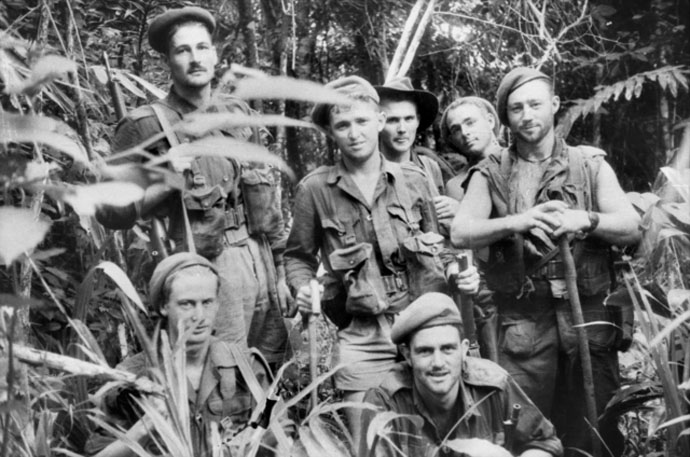
|
| Australian Independant Company Commandos - 1943 |
|
The 1st Independent Company was the first Australian Commando unit to see action against the Japanese, with a large part of the Company sent to defend Kavieng Airfield on the island of New Ireland (New Guinea) against Japanese Naval troops, with other sections sent to other islands to gather information.
In January 1942 the island was invaded by up to 4,000 Japanese Naval infantry, the Commandos had orders to destroy the airfield and any other military equipment, and to then tie up Japanese Forces in guerilla actions. They managed to destroy the equipment, but their escape vessel was damaged in the invasion, and some of the company ended up having to surrender. Other sections who escaped ended up performing some guerilla actions and then later joined with other Commando Companies. Many of the captured soldiers (113 men) were on the Montevideo Maru, a prisoner of war vessel, which was unknowingly torpedoed by the USS Sturgeon, and all men drowned.
The 2nd Independent Company was initially sent to Timor to protect Dili Airfield in Dec 1941, with a small amount of artillery and some infantry from the 8th Australian Division. In Feb 1942 the Japanese invaded East and West Timor simultaneously, overwhelming the defenders, the 2nd Independent Company withdrew into the mountains to start a guerilla campaign, and had initially thought to been destroyed, but 3 months later they contacted Darwin to arrange a supply drop with a radio make from spare parts.
|
|
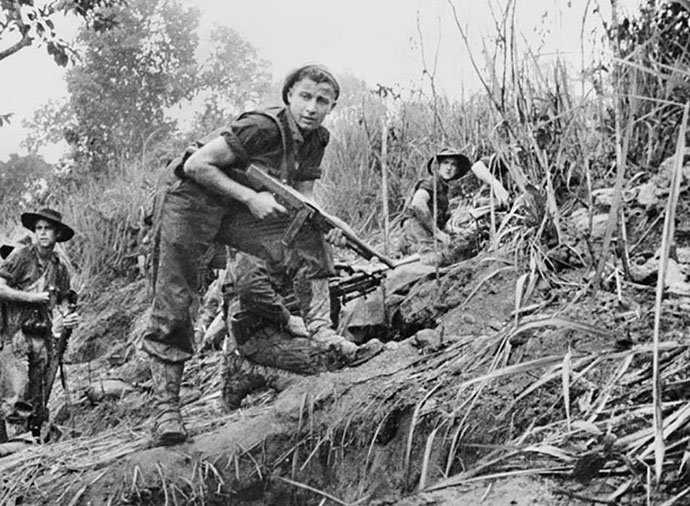
|
| 2/3 Commando about to start an assault on Timbered Knoll, July 1943 |
|
They then waged a successful guerilla campaign for 12 months, with the 4th Independent Company also brought in, in Sept 1942 to maintain pressure on the Japanese, they were eventually pulled out in Late 1942, due to ill health and increasing numbers of Japanese troops. Later in 1943 and 1944 they were put into New Britain and New Guinea to help put pressure on Japanese Forces there. By the end of the war, the unit had the distinction of having spent more time in contact with the enemy, than any other Australian unit.
The Commandos primary mission was to perform harassing missions against the Japanese, aggressive patrols and skirmishing and information gathering. If they could they would also be used in forward deployed units to capture or destroy Japanese supply dumps or attack or capture airfields. Each Company had their own Double Diamond unit Colour Patch, that was worn on their upper sleeves, and made from wool felt.
|
|

|
| Australian Commando Double Diamond Patches |
|
The Commandos in Flames Of War
So how has Battlefront represented them in the new Pacific book? See below for the Formation Diagram, but essentially apart from the Gurkhas with their wicked Kukri, these Stiletto armed Commandos are some of the best assault troops of the whole Pacific theatre, with a fearsome reputation amongst the Japanese who feared them for their jungle craft and deadly ambushes.
|
|

|
|
As you can see you have the HQ and 2 to 8 Commando sections, and one commando Scout section. I do think here a Vickers platoon is probably missing as there is lots of evidence they used them in ambushing Japanese patrols, but overall, I think this represents how they would have fought, as many smaller sections, not as a whole platoon.
|
|

|
|
Commando HQ
You can see the HQ above, showing their impressive unit stats, Fearless 3+ Motivation, Veteran 3+ Skill, with the Deadly rule giving them 2+ in Assault. The only downside for me is that it only has one team, and it’s a rifle team, but this is in keeping with the British Commando, and historically they did not have a large officer contingent. So, this does mean you need to be careful of losing your HQ, so keep them attached to a nearby Commando section for mistaken target.
|
|

|
|
Commando Section
The Commando Section is small as well, with only a 5 stand base unit, but you can add a Boys Anti-tank rifle team, and a 2” mortar, which can be used as ablative armour…I mean support weapons to help your Commando Section. You can also swap up to two normal teams to Owen gun SMG teams, at no cost, or replace one team with a British No.2 handheld flamethrower, very useful for pinning units before an assault, and making any unit hit re-roll their successful saves.
The Commandos always made sure to carry a large amount of Mills Bomb fragmentation grenades for their assaults, and they applied them liberally in their assault, this and their Aussie stilettos given them the 2+ Deadly in Assaults.
So a very compact unit, that can certainly dish out damage in the short range, or also in assault. Just make sure you pin the enemy before you assault, as your units are not very big so cannot take many casualties. But if I was to take any casualties, the poor Boys gunner or 2” operator may take the first hit. |
|
|
|
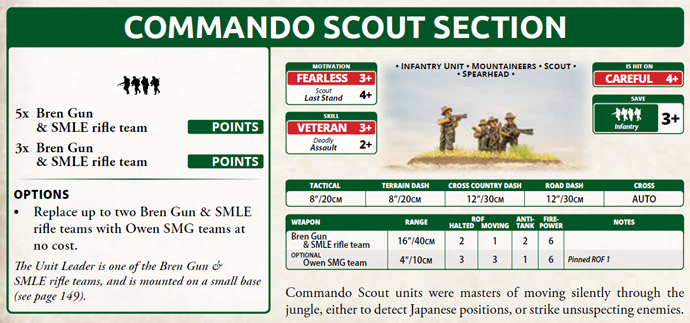
The only other unit in the formation is the Commando Scout Section, which is essentially the same as the normal Commando sections, but without the extra bells and whistles, and cannot add to the unit size with anti-tank guns or 2” mortars. But they do have the Scout and Spearhead rule, which is really going to help you forward position your Commando Sections and HQ so they can get in assault as soon as possible. To me this unit is what gets you through the door to start harassing and distract your opponent, and if played well can win you the game early.
It’s essential you take advantage of this if you can, to get into assault as soon as possible, and if you bring Command Cards like Fortify the Building (2+ save in a building), if you get into a building in your opponent’s deployment zone, you can be very hard for him to dig out, and a huge distraction!
|
 |
|
Also, keep an eye out for the great Direct Order upgrade kit you can purchase to add some character to your Commando teams and fit them out as per the options in the Sections. BSO229 – Australian Commando Upgrades, these add Owen SMG Gunners and Flamers to your BR822 - Rifle Platoon (Far East) figures that you will be using to represent the Aussie Commandos! These Upgrades will be arriving, July 19th 2025!
|
|
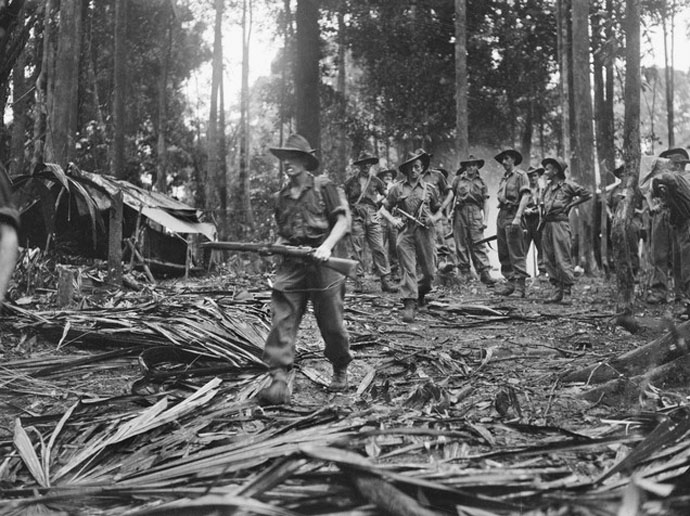
|
| Commandos about to start on a patrol 2/3 Commando, Balikpapa, Borneo 1945 |
|
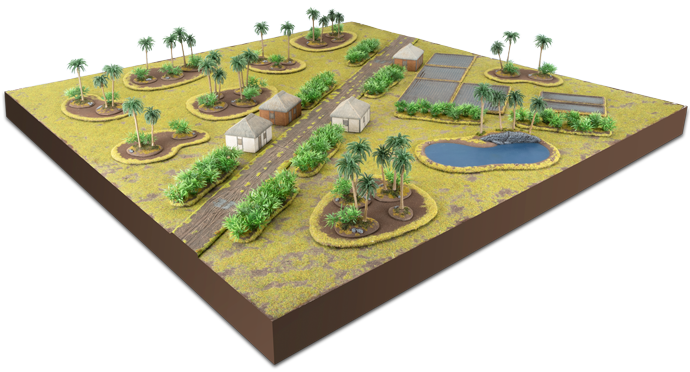
I should also mention that the Commandos have the Mountaineers special rule, which means if they start their turn next to a cliff or mountainside and pass a skill test, they can cross it using their Terrain Dash movement. This can be useful in some tables with terrain which is not the same old green fields of Europe, and the Pacific Book has a great terrain section, not only suggesting the type of terrain, but also using smaller tables to represent the more compact, and smaller sized battles that took place around villages in the Pacific.
|
|
|
|
Putting It Together
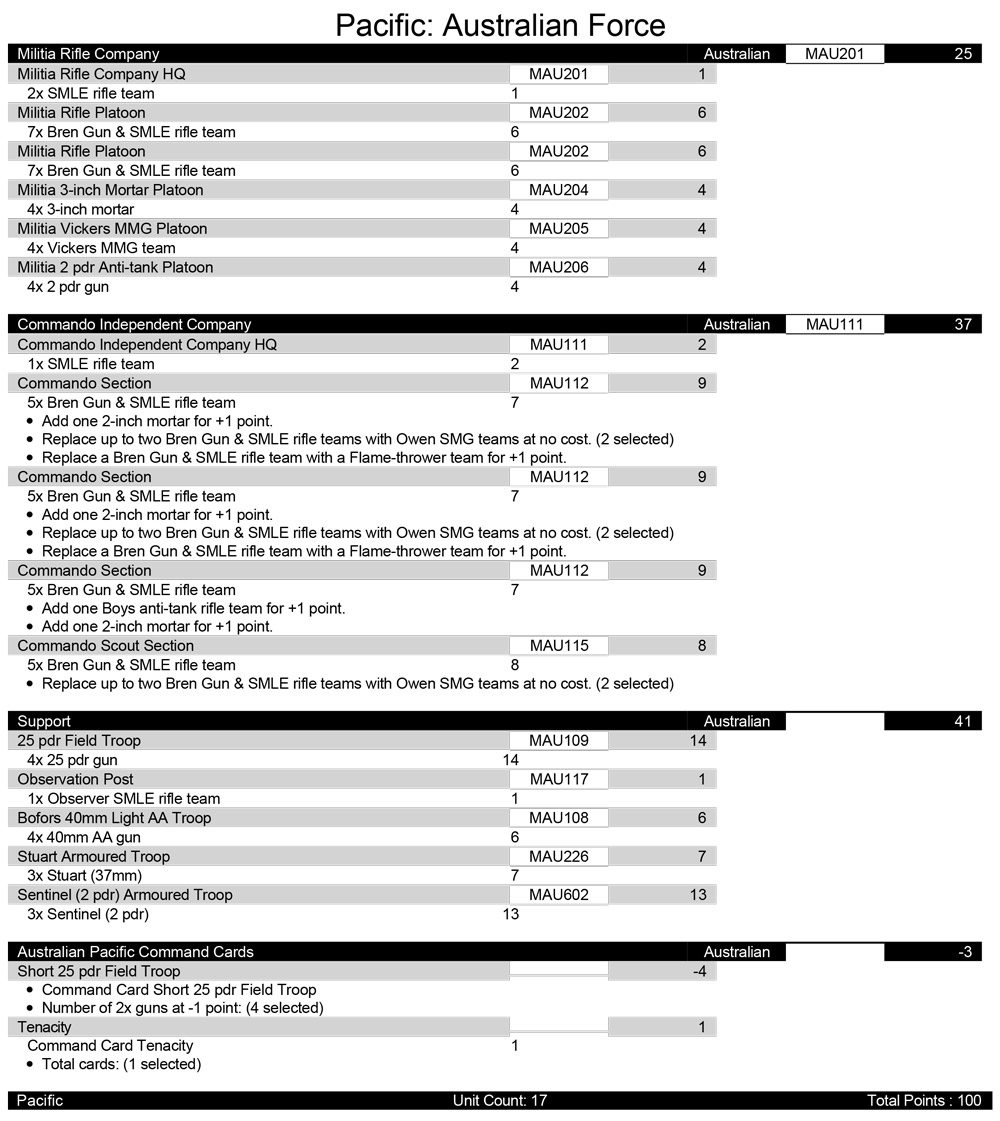
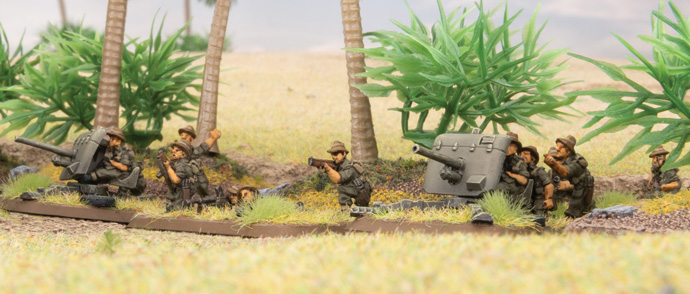
I've put together a Force using Commandos as my main attacking Force alongside some tanks, and a Militia Rifle Company for hold my objectives as I push forward. I also have a 25 Pounder Troop to give me some fire support, but have used the Short 25pdr CC to represent the stripped down fire suport gun that the Aussies invented to help get them effective fire support in remote areas. This could be stripped down to be carried via mules or flown in via transport, which they often used once they started capturing arifields off the Japanese.
|
|
|
| Click the image to enlarge |
|
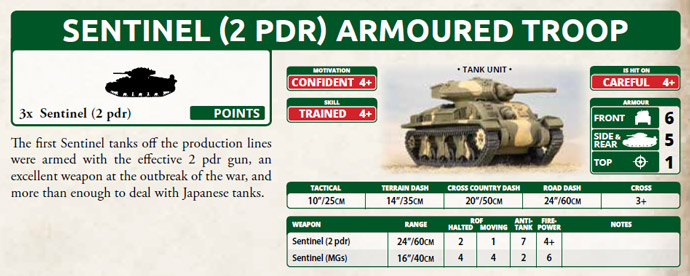
The other new addition to this list for the Pacific is the Sentinel Armoured Troop. I’ve brought these to take care of any light Japanese tanks I may face, and they are also an interesting model. They have the choice of using a 2pdr, 6pdr with no He, or a 25pdr to act like a close support tank. I have chosen the 2pdr, as their AT of 7 is enough to penetrate most Japanese tanks, and they don’t suffer the no HE rule, so can dig out infantry and gun teams more easily.
|
|
|
|
The other support I have is an Aussie Stuart platoon, that also has cannister shot (ROF 6 within 8”), and lots of machine guns. I also took some very cheap Militia Bofors to add to the firepower of the cheap Miltia Company I have, they are essentially the same as a 2pdr, but with an extra ROF and a worse save, but can also attempt to shoot down any Japanese air support.
I will say for 25 points you get a lot of firepower in the small Militia Company, with 3” Mortars, 2pdr AT guns, and Vickers HMGs, they will be hard for someone to assault, unless in medium tanks… even then. I think the new Far East Rifle Platoon figures look excellent by the way!
|
|
|
|
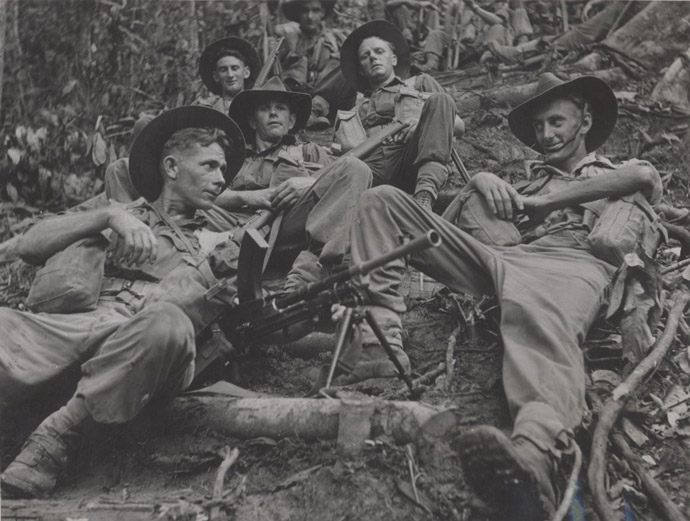
The 2/1 Infantry Battalion at Kokoda - Image by Percy Haslam
|
|
The plan will be for the Militia to hold the objectives, while the Commandos exploit their Spearhead move to quickly move up to assault, while being covered by tanks and supported by the Militia mortars and 25 pounder Shorts. The Sentinels will be the reserve supporting where needed. I’m sure it will all go according to plan right???
I think the Independent Company Commando list is a great addition which does require some practice and experience to play, But that’s just an excuse for more games!
Happy Gaming!
Adam
|
|
|
|
|