|
|
|
|
Products mentioned in this Article
--None--
|
|
|
|
|
|
|
|
|
 |
|
|
 |
Exploring Clash of Steel in a Desert Setting
By Thomas Rae
The new Clash of Steel starter sets are too good value to pass up and the new plastic kits open up new worlds of possibility. The models will work in a number of game systems and I'm always looking to get the most bang for my buck so naturally I picked up a box. However, I've painted my fair share of green tanks so I needed something more inspiring to latch onto and get my brain kicking. If you like making something a little different to everyone else then let me help you inspire your next paint scheme.
|
|
I have always loved exploring lesser known stories through my wargaming and the conflicts in the Fate of a Nation book are fascinating in a number of ways. Not only are the starter sets for Clash of Steel great value but many of the same vehicles are common between both systems. I have a few desert themed armies already and I’m in the process of hand building a desert terrain board.
In this article I’ll be looking at historical photos, colour schemes and the Fate of a Nation book to inspire my upcoming tank schemes (hopefully yours too). I’ll also be trying out a few different test models at the end. I’m looking for something with versatility between Clash of Steel, Team Yankee a with an overall desert theme but still looks interesting and not out of place in a variety of tabletop environments.
|
|
So why should you consider the desert for your Clash of Steel Models?
The Diversity
The variety in equipment used in desert conflicts such as the Six Day War is staggering. Venerable vehicles from World War 2 fought on both sides against top of the line tanks from the other side. Upgunned Sherman tanks were pitched against modern tanks like the M-48 Patton and T-54 but could also have exchanged fire with SU-100s or even dug in Panzer 4's! In some cases both sides used the same type of vehicle against one another like the Centurion.
Historical reference:
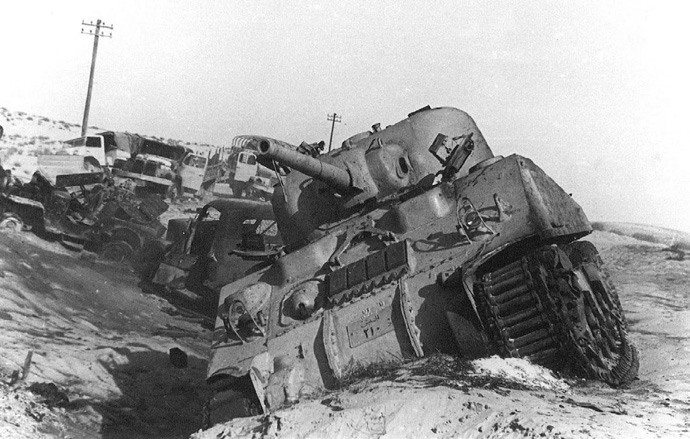
Nothing sparks inspiration like seeing something fascinating in a historical photo. If you are looking for an interesting colour scheme or a unique conversion you'll find what you are looking for in historical photos from World War 2 and beyond. Everything from dug in Archer SPGs used by the Egyptians in the Sinai to Shermans used well into the 1960s - at times fighting against other Shermans! We can use colour schemes used in real life and apply them to our Clash of Steel models.
|
|
|
| No, this isn't 1942. This Sherman was knocked out during the Suez Crisis in 1956 while in Egyptian service. |
|
Cross compatibility
A lot of the kit from the Clash of Steel starter sets can be used in other games like Flames of War, Team Yankee, Arab-Israeli etc. For instance, the Tiger II can be used in Late War Flames of War and T-54s can be used in Team Yankee as Iraq or Syria, FoaN as Egypt, Syria or a modified Israeli version, Clash of Steel and even late war Leviathans by swapping to the early turret.
|
|
Most importantly: Everything looks better in desert camouflage!
Now lets look at the starter sets and how can we can adapt them to the desert.
|
|

|
| Just imagine these in desert yellow camouflage. Think El Alamein but in 1948 (third time's the charm). |
|
British
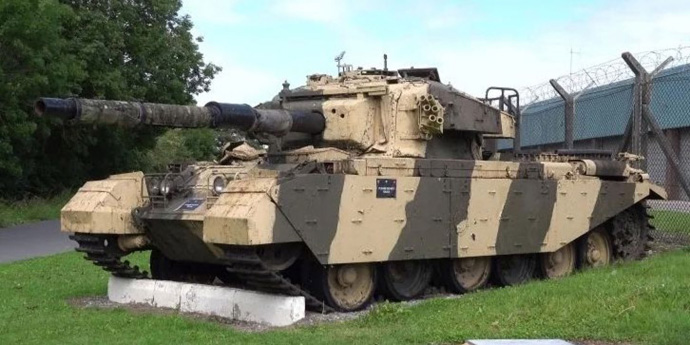
I am instantly drawn to the Centurion - not only is it a fantastic looking tank but extremely successful and ubiquitous. The British and German operation unthinkable contains 4 Centurions - which was used by nations such as Israel, Egypt and Jordan with the 20 pounder gun as well as the British.
What kind of scenario would see British armour in the desert again? Maintaining control of the Suez canal was imperative and one of the major causes of the Suez Crisis in 1956. In the Clash of Steel timeline we can imagine the “Desert Rats” of 7th Armoured Division returning to Egypt to protect British interests against a reformed Afrika Korps, or even against Soviet or American interference.
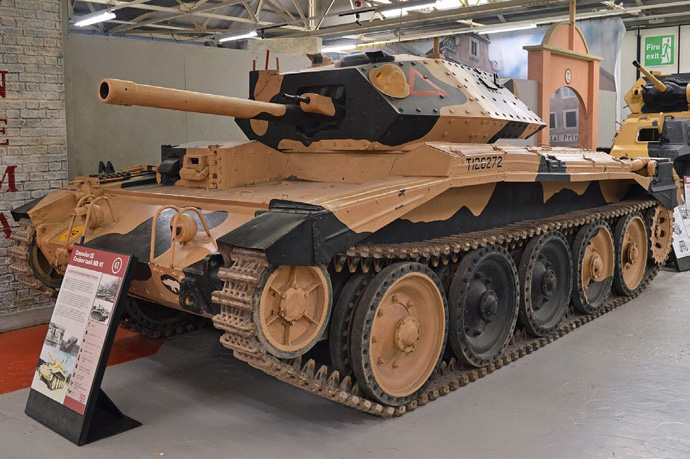
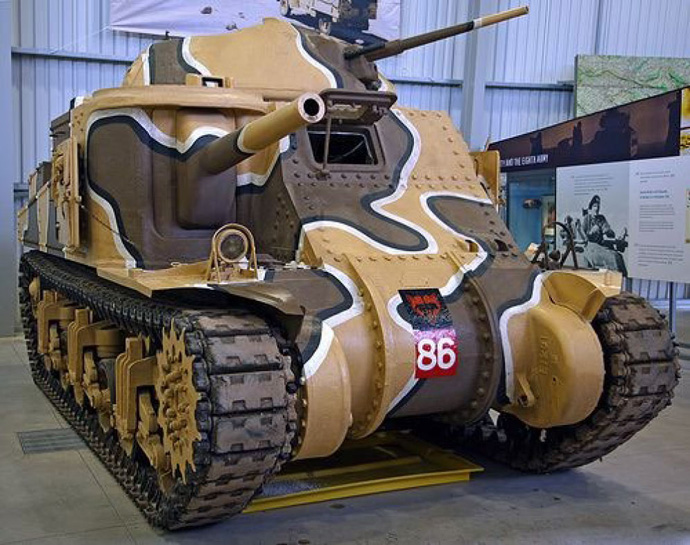
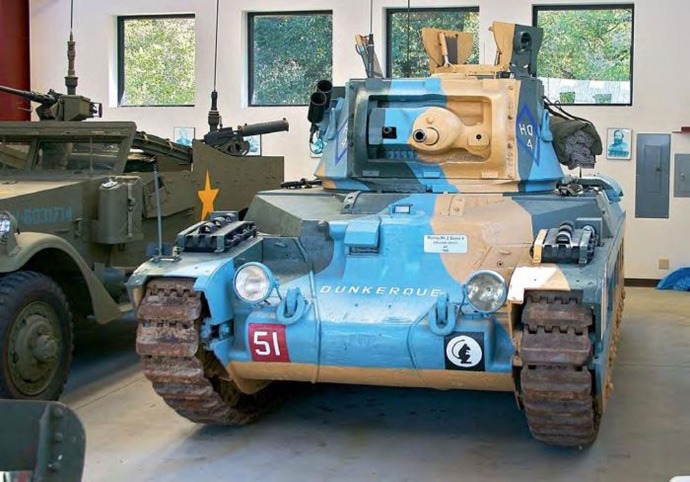
Some historical inspiration could include the famous Caunter Scheme from the early desert war or one of the many two and three tone camouflage used. However, free your mind to make something new as a field modification.
|
|
|
|
|
|
Often wrongly interpreted, the light blue shown above was actually a light green/grey on the real vehicle. However I think blue would look great on the table…
|
|
German
As I mentioned above, it’s not hard to imagine Germany reforming the Afrika Korps in Clash of Steel to contest British dominance of the Mediterranean.
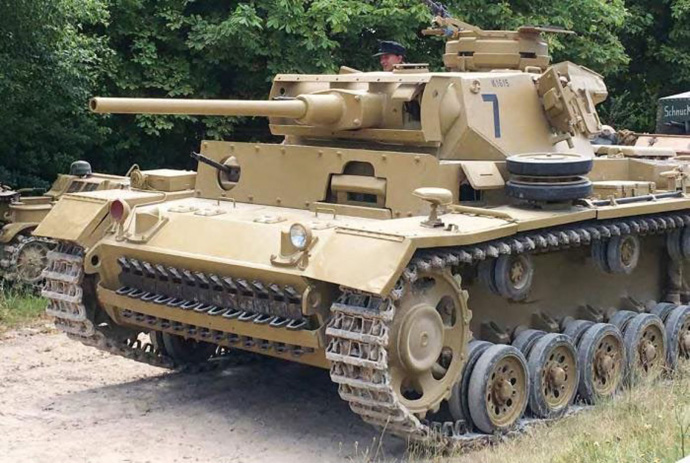
The Maus is obviously the star of the starter box and arguably makes more sense in the flat open terrain of the desert. Realistically, there weren’t any bridges in Europe that could take the weight of this beast and Europe has a lot of waterways to cross. In the desert you wouldn’t have that problem, as long as you stay off the loose sand!
|
|
|
|
It may not be as interesting as the British camouflage, however it is a great blank canvas for airbrush modulation or interesting weathering effects like chipping.
|
| Soviet
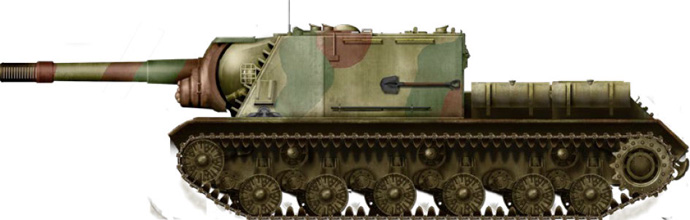
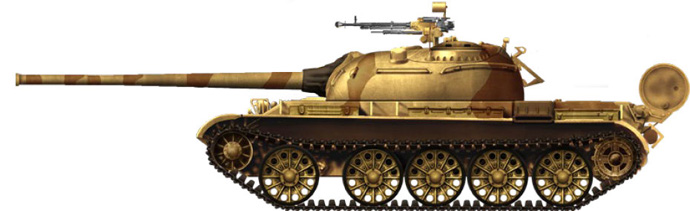
The other starter set comes with six T-54-1s which can also build the later T-54 with dome shaped turret. This saw widespread export and adoption in Middle Eastern armies and is a no brainer for the desert so there are no shortage of example photos. The T54 (including the early turret shown above) IS-3 and ISU-152 were all used by Egypt, often in a vibrant desert yellow or a variety of two and three tone camo.
The Soviet Union would be more than willing to exert influence of the Middle East - through arms export and direct action if necessary.
|
 |
 |
|
An Egyptian ISU-152 with a unique three tone camo - used in fixed emplacements into the 1970s.
|
A T54 with two tone camo. |
|
USA
The American gear is a bit more of a tricky situation as there is less historical stuff to go off. The T-28 and T-29 could end up supporting the British in North Africa again in a second Operation Torch, or to stem Soviet advances further east.
For camo schemes, olive green with bright yellow stripes and decals would be a throw back to the distinctive mid war USA theme. At the other end of the spectrum, my mind goes to much later deployments of US heavy armour to the desert like in Desert Storm.
|
So far I want to explore a couple of options:
- Egyptian Desert Yellow from Fate of a Nation
- Israeli Sinai Grey
- Something left field - Early war “Caunter” scheme
Now all I have to do is try all of them and see which I like the most.
|
 |
 |
|
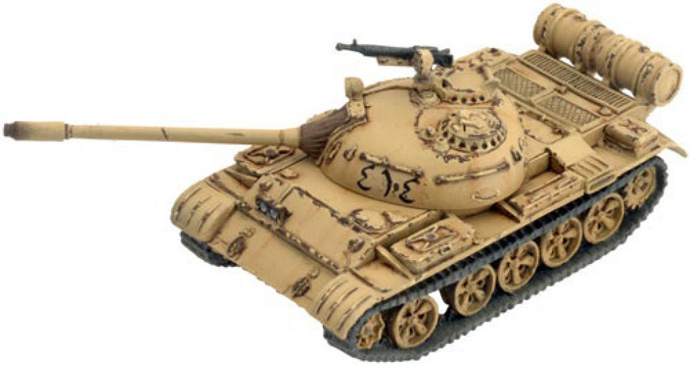
The later T-54 “dome” turret - in Egyptian yellow.
|
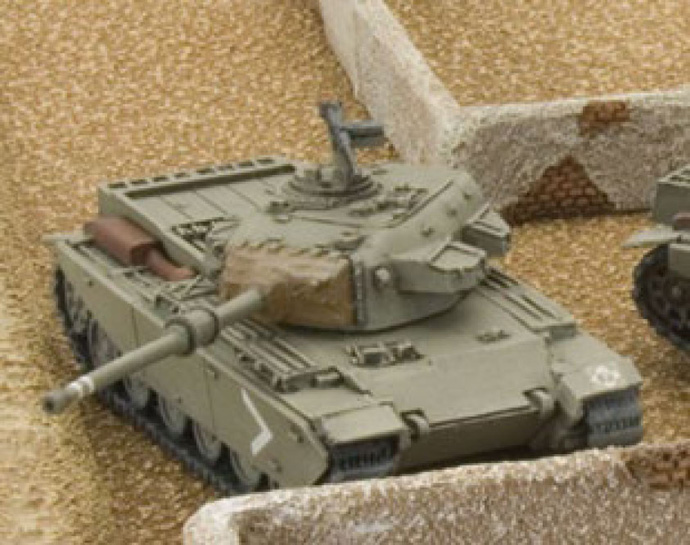
Israeli Centurion armed with the L7 105mm - in distinctive “Sinai Grey”
|
| Testing the Paint Schemes
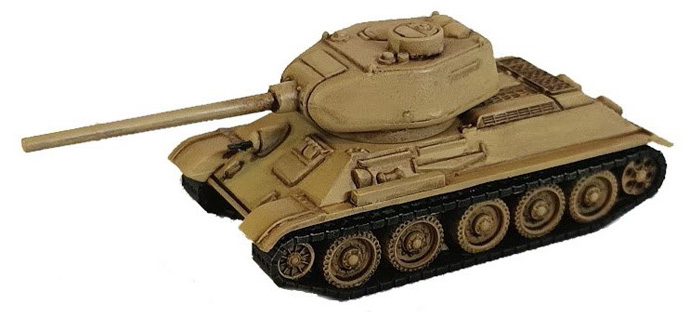
I have a spare T-34/85 knocking around so I used this for a go at Egyptian Desert Yellow.
I used Vallejo Dark Sand over the primer, a brown enamel wash cleaned up by sansodor and a drybrush of Dark Sand again. The tracks are painted Black grey. This makes a basic and functional Egyptian T-34. Enamel is still a new medium to me so it will take some more practice and I’m not entirely happy with the result.
|
 |
|
It’s bright and vibrant, but lacks catchy spots of interest. I’ll come back to this later with chipping and dust effects and see if that helps.
|
|
I also had a surplus Chieftain from Team Yankee. While this doesn't feature in Fate of a Nation or Clash of Steel (yet!) the colour scheme works as a proof of concept for an Israeli Sinai Grey:
Starting with a basecoat of Green Grey over the primer, then washed with a thinned down black wash all over. Reinforce the shadows with undiluted black wash. Bring back the basecoat colour by sponging on Green Grey again leaving some of the stained tone behind to create a blend and some texture. A drybrush and highlight of a lighter dull green and the armour colour is finished.
|
 |
|
The strength of this colour scheme is that it doesn’t look out of place in temperate or desert terrain.
|
|
I like the green grey, however I have just accidentally painted another green tank! This kind of defeats my original purpose of exploring the desert. It’s time to think outside the box a little. I had time for one final experiment after my Clash of Steel box had arrived:
With the Tortoise I went a bit experimental and painted an interpretation of the early war Caunter scheme. I was itching to give it a go but with early war still some time away the Tortoise seemed like an ideal candidate. I like the idea of the more outlandish tanks having more unconventional colour schemes.
|
|

|
|
The MG turret is magnetised to swivel so I can make pew pew noises - but I didn’t realise until editing that it wasn’t facing forward. Bugger.
|
 |
|
I’ll admit, I was surprised this turned out as well as it did and is my favourite of the three. Moral of the story: try something new.
|
|
The trick with camo patterns like this is to really emphasise the shadows and highlights more than usual - we don’t want the camo to actually work on the table and we lose sight of the silhouettes and shapes of our vehicles. I also think the relatively simple boxy shape of the tortoise lends itself to this kind of pattern. My army colour scheme isn’t sacred and having platoons with different colour schemes is a great way to add variety. Plus you have the opportunity to improve your painting skills and you can experiment with different camouflage patterns and colours. Using a few consistent colours can help tie everything together.
|
|
In conclusion:
I’m going to continue to experiment with different ideas for the other vehicles rather than become fixated on a uniform colour scheme. If you are painting dozens of tanks for an army, it can get boring repeating the same thing over and over. I’ve decided to base my army around a core of Centurion 3’s (20pdr) and I have an idea I’d like to try which I hope to share with you later.
~Tom
|
|
|
Last Updated On Thursday, October 10, 2024 by Kevin
|
|
|