|
|
|
|
Products mentioned in this Article
--None--
|
|
|
|
|
|
|
|
|
 |
|
|
 |
Italian forces in Sicily
Axis Force dispositions on invasion
Due to the Air and Naval superiority of the Allies, the Axis defence of Sicily hinged on its ground forces. The Italian units in Sicily made up the Sixth Army commanded by General Alfredo Guzzoni. It was divided into two Corps; the XII and XVI, and comprised five coastal divisions, two coastal brigades and a coastal regiment all arranged in static formations around to the coast, all of low morale and zero combat experience.
The Army also had four field divisions: 4ª (Livorno), 26ª (Assieta), 28ª (Aosta) and 54ª (Napoli). Additionally there were five ports and naval bases, and several airfields with their own defensive units.
|
| THE ITALIAN ARMY IN SICILY, 1943 |
| 6a Armata (6th Army) |
Unit Battalions and Regiments |
131° Reggimento Corazzata
10° Reggimento Bersaglieri
177° Reggimento Bersaglieri Territoriale
185° Reggimento Paracadutisti ‘Nembo’
10° Raggruppamento Semovente da 90/53 |
CI, CII
XXXV, LXXIII
DXXV, DXXVI
III, VIII, XII
CLXI, CLXII, CLXIIII |
| XII Corpo d’Armata |
|
26ª Divisione da Montagna ‘Assietta’
28ª Divisione Fanteria ‘Aosta’ |
29, 30, XVII CCNN, 25 Artillery
5, 6, CLXXI CCNN, 22 ‘Vespri’ Artillery |
Coastal Troops
202ª Divisione costiera
207ª Divisione costiera
208ª Divisione costiera |
|
| XVI Corpo d’Armata |
|
4ª Divisione d’Assalto ‘Livorno’
54ª Divisione Fanteria ‘Napoli' |
33, 34, 28 ‘Monvisio’ Artillery
75, 76, CLXXIII CCNN, 54 Artillery |
Coastal Troops
XVIIIª Brigata costiera
XIXª Brigata costiera
206ª Divisione costiera
213ª Divisione costiera |
|
| XIV Panzerkorps (German) |
|
15. & 29. Panzergrenadierdivision (German)
Hermann Goring Panzergrenadierdivision (German)
1. Fallschirmjagerdivision (German) |
Arrived during the campaign as reinforcements |
|
The backbone of the island garrison, however, were the two German divisions: 15. Panzergrenadier and Hermann Göring Panzer divisions. The 15. Panzergrenadierdivision had 15,000 men, well supplied and trained with at least 60 tanks. The Hermann Göring division had approximately 17,000 men and 110 tanks, including 17 heavy Panzer VI ‘Tigers’. The divisions had been recently reconstituted and were at maximum preparation and efficiency.
The two divisions had been placed under the tactical control of General Guzzoni, though they were under the command in the field of General Fridolin Von Senger und Etterlin.
|
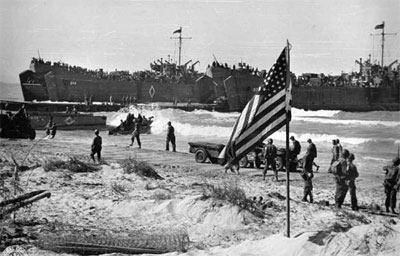 |
| He acted as the link between Fieldmarshal Albert Kesselring in Italy and Guzzoni. In Sicily there was approximately 40,000 German troops and 230,000 Italians. |
Locations
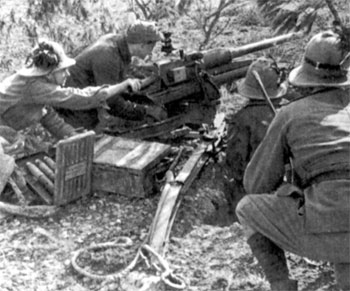
On the first day of the invasion the disposition of the Axis was as follows: The divisions Aosta and Assieta and two thirds of 15th Panzergrenadier were in western Sicily, to guard against possible landing near Palermo. The divisions Livorno and Napoli with a large Kampfgruppe from Herman Göring were positioned in the centre and south of the island, ready to counter invasion from south. |
 |
German Kampfgruppe Schmaltz (consisting of units from Herman Göring and 15. Panzergrenadier divisions), was positioned on the eastern coast around Catania.
Bersaglieri
A number of Bersaglieri units fought in Sicily. The Bersaglieri of the 10° Reggimento Bersaglieri, and the 177° Reggimento Bersaglieri Territoriale, along with an anti-tank battalion were part of the Sixth Army reserve.
|
|
Paracadutisti
185° Reggimento Paracadutisti ‘Nembo’ formed on April 1, 1941 at the same time as the 1° Reggimento Paracadutisti, also served in Sicily as part of the Sixth Army reserve.
Though initially intended as part of the Folgore, they never went to North Africa and were keep back to form the nucleus of the 184^ Divisione Paracadutisti ‘Nembo’.
When Tunisia fell Nembo were sent from Italy to Sicily and were soon embroiled in heavy fighting against the Allies. They ran a fighting withdrawal through Calabria until September 8, when its VIII battalion was destroyed in combat against the Canadians at Aspromonte.
Mountain Infantry Division
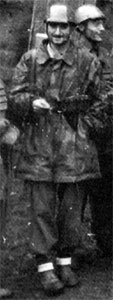
26ª Divisione da Montagna ‘Assietta’ was a mountain infantry division. It was much like a normal infantry division except its artillery regiment was equipped with mountain guns. They were not Alpini, and lacked the extensive training the Alpini had in alpine warfare.
|
 |
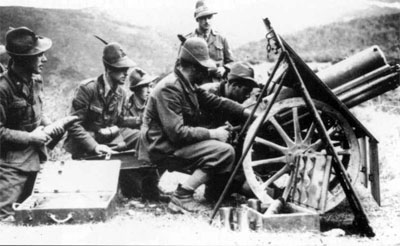 |
In 1940 the artillery were allowed the honour of wearing the Alpini cap, but only with the normal artillery badge and without the feather. The officers wore "normal" artillery officer’s headgear and not the Alpini cap.
They had two 75/13 and one 100/17 battalion. Both weapons could be broken down for easy movement with pack animals.
|
Infantry Divisions
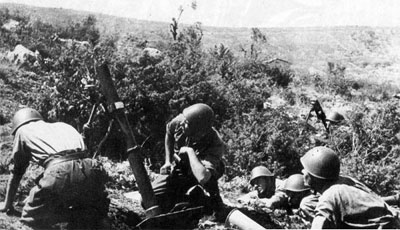
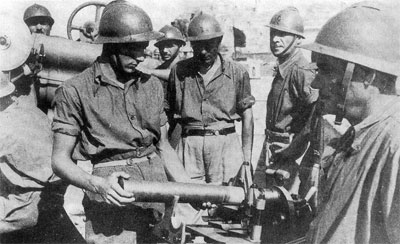
All three infantry division were considered mobile on paper, but only the Livorno was significantly motorised. The Livorno division had motorized artillery and some motorised transport for its weapons and infantry. Two Battalion of ex-French R-35 Renault light tanks were also available, 131° Reggimento Corazzata, CI and CII battalion. The CI battalion joining the first days fight around Gela. |
 |
 |
Coastal Divisions and Brigades
As stated above these were of low moral and combat readiness. They had been hastily formed from men of the CCNN militia in the older age group. Most were men in their 40s or 50s. They had little equipment and uniforms were usually the light army grey fatigues with the old WWI Adrian helmet. |
10° Raggruppamento Semovente da 90/53
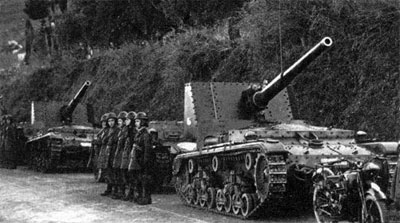
Thirty Semovente da 90/53 equipped the 10° Raggruppamento under the command of Colonello Bedogni. The Raggruppamento had three battalions, each of two batteries of four Semoventes each. The final six Semoventes remained in Italy for training and reserve. One battery commander received the Iron Cross for his support of his German Allies during the retreat to Messina. |
 |
Last Updated On Wednesday, June 26, 2019 by Wayne at Battlefront
|
|
|